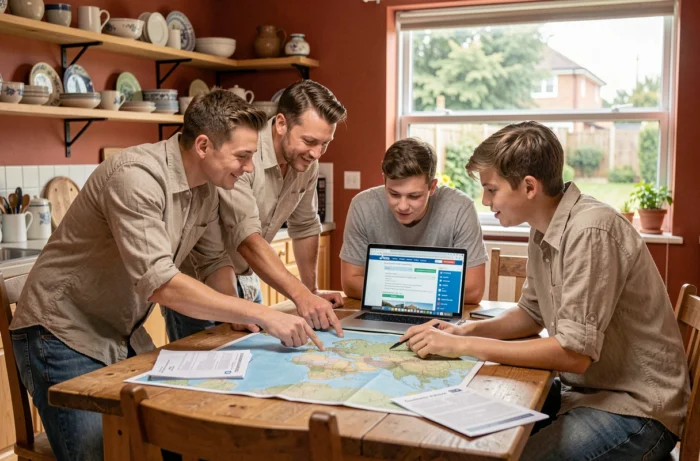
Organizing a family vacation involves balancing the constraints of each family member (children’s ages, budget, travel duration) with a simple goal: to ensure the trip provides relaxation and memories, not logistical stress. This task relies less on the chosen destination and more on the preparation method beforehand.
i-Size standard and car seat: the regulatory point to check before the trip
As of September 1, 2024, car seats approved under the old R44 standard can no longer be sold. The R129 standard, known as i-Size, requires traveling rear-facing for a minimum of 15 months. Before loading the car for a family road trip, checking that the equipment is compliant avoids a fine and concretely protects the youngest.
This regulatory point is rarely addressed in family vacation guides, yet it determines the comfort and safety of the journey. A non-compliant seat purchased second-hand before this date is no longer legal for resale or use.
To compare accommodation options and find a stay suitable for families, platforms like evacances.net allow filtering by type of lodging, capacity, and included services, simplifying the search phase.
Family vacation budget: prioritizing the significant expenses
In 2026, analyses based on data from Insee and the Ministry of Tourism report shorter stays and a decrease in spending on restaurants and activities. The budget has become a structuring factor in family decisions, beyond just the choice of destination.
Accommodation and transportation represent the two heaviest expenses. Reducing these frees up a margin for activities on-site, often what children remember most from the trip.
Camping: a format aligned with family constraints
Camping remains the most budget-friendly accommodation option. This format offers a suitable environment for children (space, games, pool) without the costs of a hotel or high-end vacation rental.
Book early to pay less
Prices for family accommodations rise significantly as school holidays approach. Booking several weeks in advance, or even as soon as availability opens, secures suitable lodging at a controlled price. Families that wait until the last minute face a limited choice and inflated prices.
- Check local assistance: some municipalities or CAF offer funding schemes for family vacations, often unknown.
- Prefer half-board or on-site cooking rather than daily restaurant meals, the first expense sacrificed by families according to recent trends.
- Compare travel costs: a road trip by car is cheaper than flying for a family of four, but tolls and fuel must be included in the calculation.
Health preparation for a trip with children
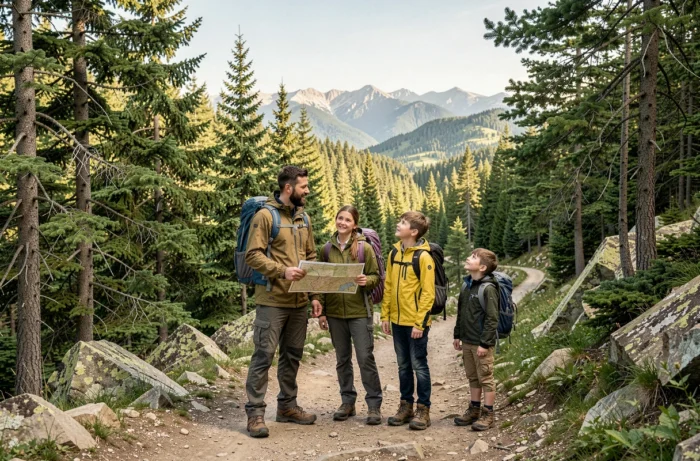
The health aspect of a family trip begins well before departure. Some vaccinations require a delay of one to two months to be effective, necessitating early action, especially for destinations outside Europe. The Service-Public website recommends checking the specific risks of each country and consulting a doctor well in advance.
For trips during hot weather, the organization of days must be adapted. Outdoor activities should be scheduled for the morning or late afternoon. Young children are more susceptible to dehydration and heatstroke, which requires regular hydration and enhanced sun protection, even on cloudy days.
Travel kit: what to really bring
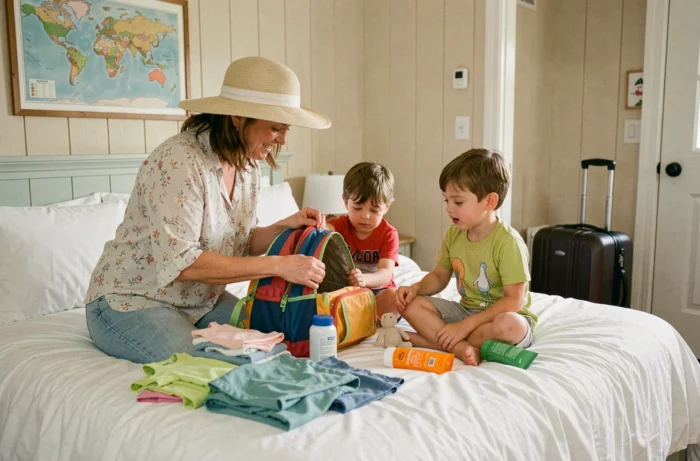
The family suitcase can quickly overflow. Instead of planning for everything, focus the first aid kit on actual needs: age-appropriate fever reducer, oral rehydration solution, antiseptic, high-SPF sunscreen. The rest can usually be purchased on-site.
Car travel organization with children
The journey often represents the most dreaded part of family vacations. Leaving during off-peak hours reduces both fatigue and the risk of traffic jams. Departing very early in the morning or in the evening allows children to sleep part of the way.
Planning breaks every two hours remains the basic recommendation, but with young children, a break every hour and a half is more realistic. Each stop should allow for stretching and hydration.
- Load audio content (stories, music) instead of relying solely on screens, as prolonged use in the car often causes nausea in children.
- Keep a bag accessible with water, snacks, and changes, separate from the rest of the luggage in the trunk.
- Check the vehicle’s air conditioning before departure: an overheated cabin turns a few-hour trip into a trial for the whole family.

A successful family stay rarely depends on the destination itself. The quality of preparation, from the compliant car seat to the anticipated budget, determines the level of peace on-site. Families that invest time in these decisions beforehand reclaim that time during vacation, in the form of shared moments rather than problems to solve.