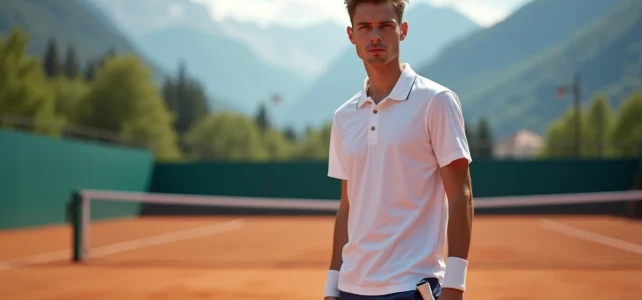
Jannik Sinner represents Italy on the circuit, but his surname sounds Germanic and his parents live in an alpine village where German is more commonly spoken than Italian.
Jannik Sinner was born on August 16, 2001, in San Candido, known as Innichen in German, in South Tyrol. This autonomous province in northern Italy, bordering Austria, operates daily in three languages: German, Italian, and Ladin.
South Tyrol: why the name Sinner sounds Austrian
South Tyrol was annexed to Italy after World War I, but the population remains predominantly German-speaking. Jannik’s parents, Johann (also called Hanspeter or Hans in German-speaking contexts) and Siglinde Rauchegger, belong to this minority. German is their mother tongue and their identity foundation. The dual use of the father’s name illustrates the ongoing overlap between Italian administration and Austro-Tyrolean culture.
This discrepancy is evident in everyday life: road signs are bilingual, administrative forms exist in two versions, and residents switch from one language to another depending on the interlocutor. To better understand the origins and nationality of Jannik Sinner’s parents, it is essential to keep in mind this regional reality that has no equivalent elsewhere in Italy.
Jannik grew up in Sesto (Sexten in German), a village in the Dolomites. His first words, his first conversations at home were in German. Italian came later, as a second language, followed by English with the professional circuit.
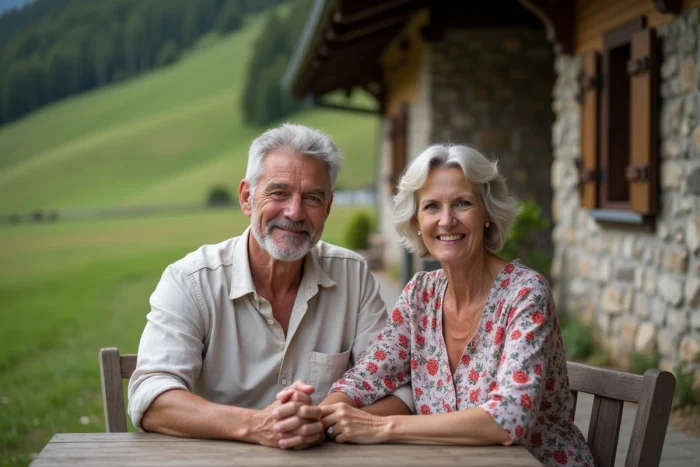
Johann and Siglinde Sinner: parents who are cooks who stayed in the mountains
This professional detail appears in almost every family portrait and explains part of Jannik’s upbringing: discipline, strict schedules, direct contact with nature.
Johann and Siglinde categorically refused to move. They never left the mountains to follow their son to the major tennis cities. When Jannik left to train far from home, still a teenager, his parents remained in Sesto. No relocation to Milan, Monaco, or Florida.
A life choice that impacts the player’s development
This distance maintenance is not trivial. Jannik left the family home at a very young age to join a training center. The early separation, in an individual sport where psychological pressure is constant, forges a particular type of autonomy.
The parents instilled values related to their daily life as mountain dwellers:
- A work ethic modeled on the seasonal rhythms of the lodge, where days start early and end late
- A form of humility linked to life in a small village, far from media circuits
- An attachment to local roots, even after their son’s financial and media explosion
Italian nationality and German-speaking identity: how Jannik Sinner manages the question
The question regularly arises in press conferences and in Italian media: Is Sinner “really” Italian? The administrative answer is simple; he holds Italian nationality and represents Italy in competition. The cultural answer is more nuanced.
Jannik describes himself as “100% Italian” while acknowledging his family’s Austro-Tyrolean heritage. This position precisely reflects how his parents passed on to him an Italian identity that could be described as “calm,” without denying the autonomist and German-speaking context of South Tyrol.
It is noted that Sinner speaks at least three languages fluently (German, Italian, English), a trilingualism directly inherited from his family and regional environment. On the circuit, he switches effortlessly depending on the tournaments and interlocutors.
From alpine skiing to tennis: the role of parents in the sports transition
Before picking up a racket, Jannik Sinner practiced alpine skiing. In South Tyrol, it is the default sport. Children put on skis before they can read, and local competitions are part of the school calendar.
Jannik quickly showed unusual aptitude for tennis. The decision to switch from skiing to tennis was not obvious in a region where skiing represents much more than a pastime. The parents supported this transition without forcing it, allowing their son to choose.
What skiing brought to the tennis player
Opinions vary on this point, but several tennis observers believe that early skiing practice helped develop specific physical qualities in Sinner:
- A sense of balance and motor coordination honed from childhood on alpine slopes
- An ability to manage speed and direction changes, transferable to movement on a court
- A mental resilience linked to competition in the mountains, where conditions change from one descent to another
The transition from skiing to tennis remains a strong marker of Sinner’s sporting identity. He speaks about it regularly, and this atypical path contributes to his distinction on a circuit where most players have only known the racket.
Jannik Sinner’s trajectory cannot be understood without this intertwining of a border region, German-speaking parents rooted in the mountains, and a bilingual experience in daily life. His Italian nationality coexists with his Tyrolean roots. It is precisely this layering that makes his profile unique in global tennis.