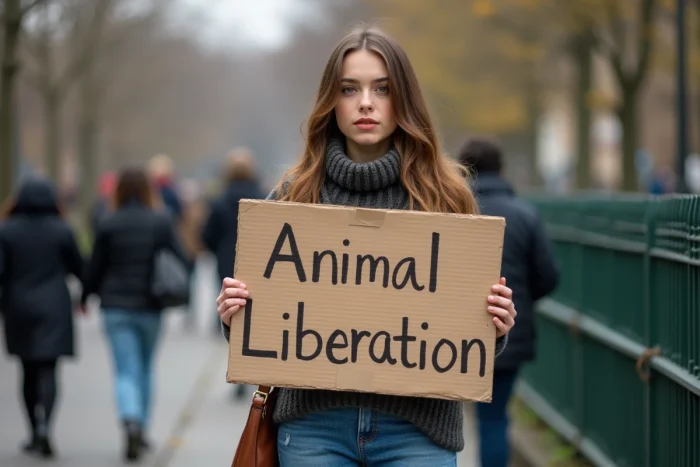
A British law from 1822 prohibits beating cattle and sheep, but not horses or dogs. The term “animal rights” appears in legal language as early as the 19th century, yet it does not guarantee universal protection for species. Contemporary debates rely on ethical, philosophical, and scientific arguments, challenging the traditional hierarchy between humans and other animals. Some countries today recognize animal sentience in their legislation, while others maintain traditional practices that are difficult to reconcile with this principle. The boundaries between moral progress, economic interests, and cultural traditions remain fluid.
Animal Liberation: Origins, Concepts, and Schools of Thought
The concept of animal liberation truly emerged in the 1970s, brought to light by Peter Singer. However, its roots go much further back: in the 18th century, Jeremy Bentham disrupted the codes and posed a simple yet explosive question for the time. Animals feel pain, and it becomes impossible to remain indifferent on the grounds that they do not speak the same language as us.
From there, ideas clash. Advocates of antispeciesism, such as Florence Burgat or Jacques Rousseau, challenge the dividing line between humans and non-humans, deeming this boundary purely artificial and morally untenable. On the other side, some prefer to focus on concrete protection, primarily concerned with animal suffering without necessarily banning all distinctions between species.
This debate, far from being confined to academic circles, changes the game on the ground. It calls into question law, science, and society as a whole. And for those who wish to delve into the history, figures, and positions, there are resources dedicated to the subject: learn more at animal-liberation.net.
What Ethical and Social Issues Does the Defense of Animal Rights Raise?
The question of defending animal rights has become prominent in public discourse. Topics related to animal suffering, the well-being of dogs in cities, or the disappearance of wildlife infiltrate everyday discussions. What was once mundane is now shocking: acts of cruelty are exposed, debated, and condemned.
Ethically, our consumption habits are being questioned. Should we continue eating meat? Move towards a vegan lifestyle? Should we support or reject intensive farming? Each option requires a stance on the place of animals among us. The notion of antispeciesism then disrupts the game, opposing any form of discrimination based on species membership. For its advocates, it is about transcending a logic of purely human interests.
This pressure on animal protection laws is also reflected in the social sphere. With well-known organizations, such as the Society for the Protection of Animals, or figures like Brigitte Bardot, the animal cause has gained visibility and legitimacy. Since the first major law in 1850, each legislative advancement triggers controversies and debates, from parliamentary chambers to social media.
Here are the main dynamics that currently organize the reflection on animal conditions:
- Animal protection: laws are gradually integrating animal sensitivity as a structuring element.
- Animal rights: the need for a specific legal framework to guarantee their well-being and uniqueness.
- Vegan life: this evolution in consumption patterns reflects a search for coherence with one’s moral and social principles.

Antispeciesism and Society: Towards a Reevaluation of Our Relationship with Living Beings
The development of antispeciesism in France is no coincidence. Underneath, there is a genuine questioning of human supremacy. Antispeciesists point out inequalities that are anything but natural; they demand similar attention for all suffering, regardless of species.
A significant symbolic moment illustrates this evolution: the World Day Against Speciesism. In Paris, Lyon, or Marseille, associations and activists gather, alternating between conferences, public actions, and digital campaigns: each initiative aims to trigger concrete awareness, question habits, and shake collective certainties.
Animal protection and defending animal rights then serve as springboards to rethink the overall functioning of our society: power dynamics, justice, and the construction of our values. Adopting a vegan lifestyle or revising practices is often the result of reflection influenced by authors like Peter Singer or Florence Burgat, supported by recognized publishing houses.
To grasp the extent of the commitment to the animal cause, here are some significant milestones:
- Animal liberation: breaking free from the inherited framework that justifies the suffering inflicted by humans.
- Antispeciesism: critiquing any discrimination based on species, not just violent treatment.
- Modes of action: moving from awareness to direct action, from education to associative engagement, sometimes including civil disobedience or the creation of committed essays.
Tomorrow, the way we approach the animal question will likely be unrecognizable. But at its core, this inquiry is already shaping our benchmarks: it draws a fluid boundary, a challenge posed to society to reinvent its relationship with the living world.