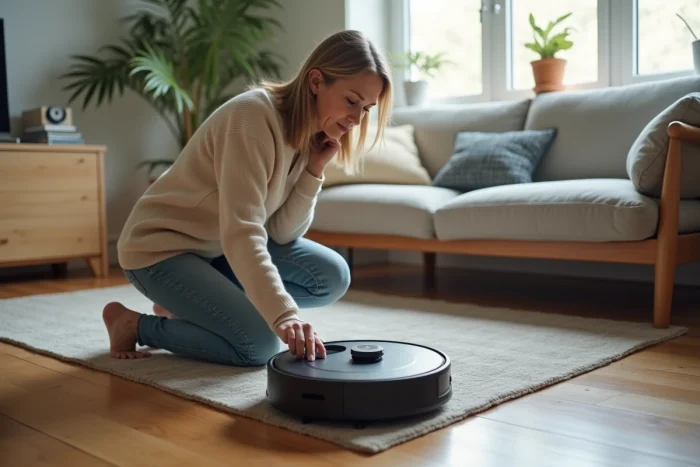
2,000 Pa reign over the box, like an unyielding guarantee. However, this highlighted figure is merely one facet of the problem. One can display spectacular power without managing to dislodge a hair stuck in a dense carpet. What matters is the overall design: controlled airflow, choice of brushes, interior arrangement. Often, where marketing gets carried away, reality sneaks in through the back door.
Trying to compare vacuum robots can quickly turn into a puzzle. Brands play with words, change units, mix enticing promises with difficult-to-interpret numbers. To escape the maze, it’s better to arm oneself with critical thinking, cross opinions, examine the reality behind the label, and rely on everyday experience rather than flashy slogans.
The suction power as seen by the manufacturer
Faced with the abundance of pascals on technical sheets—1500, 2000, 3000 Pa—the consumer often finds themselves overwhelmed by the numbers. These values touted by brands only indicate the maximum pressure, but in real conditions, multiple factors come into play: efficiency of the airflow circuit, design of the brushes, and actual ability to maintain performance across the entire surface to be cleaned. An impressive promise on paper can quickly hit the thick carpet of the living room.
It’s then difficult to navigate without testimonials or independent evaluations. To go beyond commercial speeches, it remains relevant to consult concrete user feedback or refer to analyses like understanding suction power, which dissect what these numbers really imply in daily use.
Adapting your choice to the type of rooms
The flooring of a home is not a trivial detail when choosing a robot vacuum. On tiles, hardwood, or vinyl flooring, there’s no need to aim for the top tier in terms of power: between 1500 and 2000 Pa, one already ensures a very decent level of maintenance. But the equation becomes more complex when plush carpets or thick rugs come into play, where dust and hair cling tenaciously.
Adapting to thick carpets and rugs
Models below the 2000 Pa mark quickly show their limits on thick fluff and long-fiber carpets: trapped grains of sand, embedded pet hair, nothing is spared. Switching to robots capable of delivering more than 3000 Pa then becomes wise, provided one accepts that the noise level will rise accordingly. This criterion is not negligible, especially for those who schedule cleaning at night or want to maintain a minimum of peace at home.
To clarify the differences that matter, let’s keep the following criteria in mind when choosing:
- For hard floors (tiles, hardwood, vinyl), the ideal is a robot capable of modulating its power and targeting fine dust;
- As soon as it comes to deep carpets or thick rugs, a device ready to deploy significant power without flinching in the face of obstacles is necessary.
Co-habiting with a pet also means opting for a brush that is easily removable: nothing is more tedious than having to extract clumps of trapped hair, passage after passage.
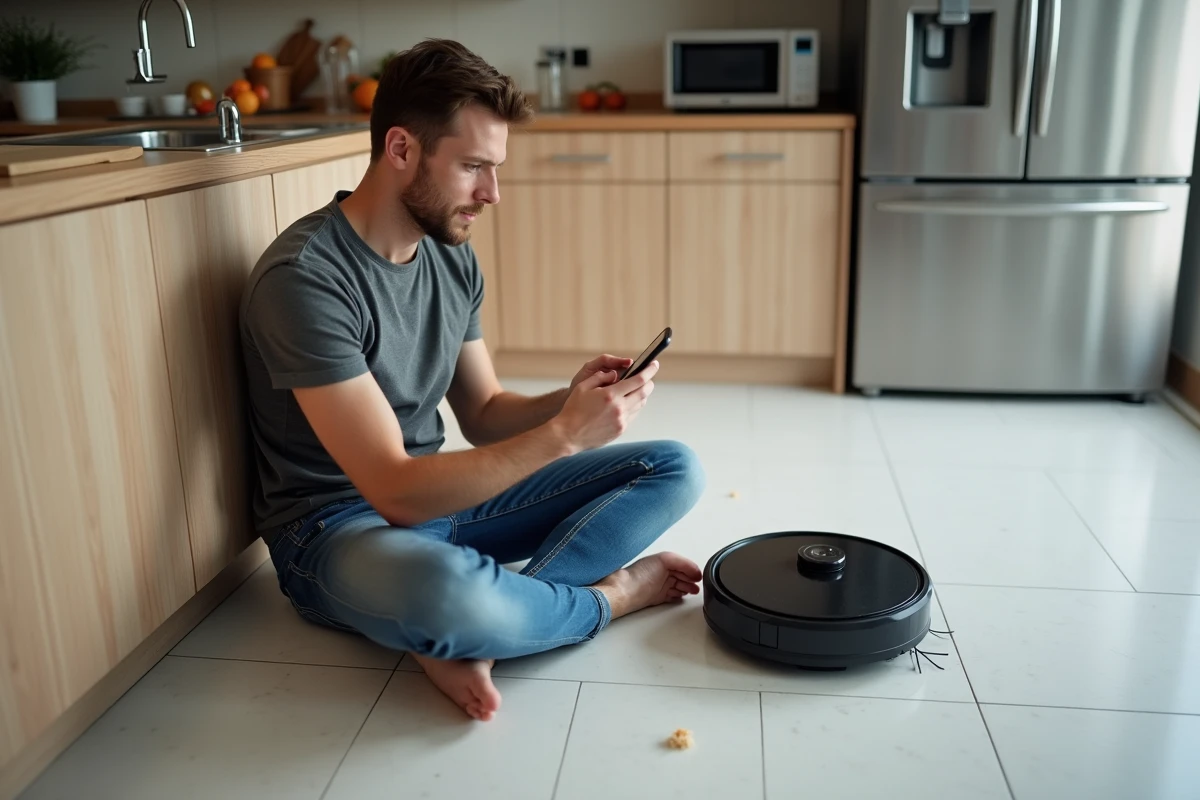
Criteria to check before placing an order
Looking only at the displayed power would be a mistake. The motor must endure over time, the brushes should be easily detachable, and the filtration system must withstand the repeated assaults of everyday dust. For a household with pets or young children, an automatic emptying station radically changes comfort: fewer stops, less handling, lighter maintenance.
In terms of sound, not all robots offer the same experience. The most sophisticated models provide adaptive cycles, advanced customization via a mobile app: scheduling, coverage areas, choice of a quiet mode. Very practical in an apartment or for juggling fragmented schedules.
Some also come equipped with “washing” functions using an integrated mop: ideal for wiping away fine dust and small marks from daily life. Thanks to app control, managing passes, suction power, and frequency becomes even easier, all automated, without wasting time.
Before any purchase, it is worth reviewing a few really concrete aspects:
- The robot’s ability to overcome small obstacles, climb onto a thick carpet, or move from one room to another without slowing down;
- The volume of the dustbin, to limit too frequent emptying;
- The speed of removing or cleaning the brushes, especially with the daily presence of hair or dust bunnies under furniture.
With equivalent technical criteria, all the comfort lies in the use: hassle-free maintenance, intuitive app, real time savings. Adopting the right robot is almost like rediscovering one’s own interior: a spotless floor, effortlessly, that makes one forget the routines of yesteryear. A simple gesture, a well-chosen device, and domestic life opens up to new perspectives.