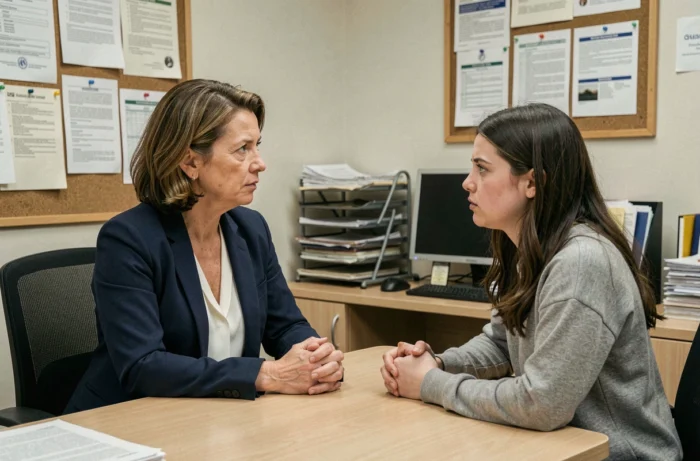
A tenant receives an eviction notice, a person is discharged from the hospital without housing solutions, a single parent can no longer feed their children. In these situations, we need a social worker quickly, not in three weeks. The problem is that the contact person to reach depends on the nature of the emergency, and knocking on the wrong door wastes precious time.
Social emergency numbers: which one to call depending on the situation
The most common reflex is to dial 115, the national social emergency number. This number, free and accessible every day, is managed by the departmental SIAO (Integrated Service for Reception and Orientation). It prioritizes requests for overnight shelter: homelessness, domestic violence requiring immediate accommodation, sudden housing loss.
If 115 does not offer a place, which happens regularly in stressed departments, noting the date and the response received for each call is a useful reflex. This history can serve as proof in the context of a claim under the enforceable right to accommodation (DAHO).
For situations that do not strictly fall under emergency accommodation, one can consult a practical guide on E-woman that details the appropriate contacts for each type of difficulty, whether financial, familial, or administrative.
Two other numbers are worth knowing:
- 3114 (national suicide prevention number) directs to immediate psychological support and can trigger a social intervention if the situation warrants it.
- 119 (Child Protection Helpline) concerns situations of abuse or danger involving a minor and connects with departmental child protection services.
- 3919 (Violence Against Women Info) listens, informs, and directs victims of domestic violence to accommodation and social support structures.
CCAS, departmental council, hospital: which door to knock on in an emergency
Social emergency and sustainable support do not go through the same contact person. Confusing the two slows down the response.
The CCAS of the town hall for a quick first contact
The Municipal Social Action Center remains the most geographically accessible entry point. One can go there without an appointment in most municipalities. The social worker at the CCAS assesses the situation, directs to municipal emergency aid (food vouchers, assistance with bill payments), and can send a report to the SIAO if accommodation is needed.
In small municipalities without a CCAS, the town hall itself provides a link to the departmental social services.
The social service of the departmental council for complex situations
The majority of sector social workers operate within departmental councils. They manage cases of child protection, RSA, and loss of autonomy. To reach them, one goes through the Departmental Solidarity Houses (MDS) or the Medical-Social Centers (CMS), depending on local terminology.
Waiting times for a first appointment vary significantly from one department to another, sometimes from a few days to several weeks. In case of a proven emergency, specifying the critical nature of the situation from the first call often allows for an earlier slot.
The hospital social worker in case of health issues
During a hospitalization or a consultation in a care service, the hospital’s social service intervenes directly. Its role is to prepare for discharge when the patient has no housing solution, activate rights to Health Insurance, and coordinate with external services. One can request it through the nursing staff or the reception of the establishment.
When 115 does not answer: alternative solutions to know
Calling 115 without getting a place does not mean that all options are exhausted. Day shelters, night stops, and outreach teams are concrete alternatives. These structures allow one to meet a social worker, conduct an initial assessment, and sometimes trigger a referral to the SIAO through another channel.
Local associations (Red Cross, Catholic Relief, Emmaus, Restos du Cœur depending on the area) often have social permanence. They do not replace a sector social worker, but they provide a first safety net when institutional circuits are saturated.
For employees, there is often an unknown channel: the social service in companies. Structures with more than 250 employees sometimes have an internal or shared social worker. This professional can intervene on issues of housing, over-indebtedness, or health, in connection with the employer but under professional secrecy.
Professional secrecy and information sharing between social services
When soliciting multiple contacts in parallel (CCAS, hospital, association), a question arises: do these professionals communicate with each other?
Article L.1110-4 of the Public Health Code regulates this sharing. Outside the same care team, the prior consent of the person is required to transmit information. The information exchanged must remain strictly necessary for the care.
In practice, this means that one retains control over what circulates. If a hospital social worker wishes to send a file to the CCAS, they must obtain the patient’s consent. This framework protects, but it also means having to repeat one’s story to each new contact when this authorization is not given.
Contacting a social worker urgently relies less on a unique number than on proper guidance from the first call. 115 for immediate accommodation, CCAS for quick local assistance, the departmental council for structured follow-up. Keeping a written record of each step, with dates and responses, remains the most useful gesture when the situation prolongs.